Analysis of Honey Production
Analysis of Honey Production in Kalehe and Walikale near PNKB: From Tradition to Innovation: Strategic Commentary Based on NPADR-WMU Data.
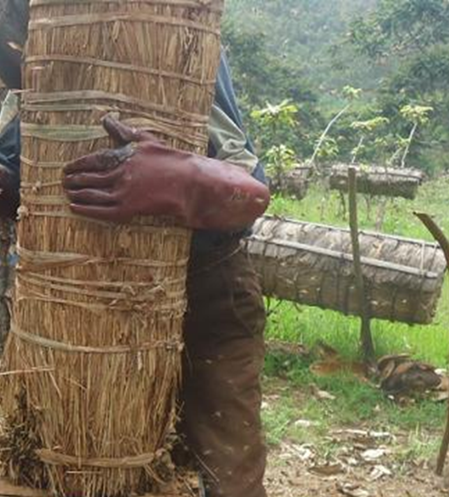
The image of this traditional beehive made of straw and vines perfectly illustrates the challenges of the Walikale territory: it symbolizes a "survival" beekeeping practice now considered archaic.
This cylindrical structure, while demonstrating ancestral know-how, is extremely vulnerable to harsh weather and necessitates a harvesting method using fire.
This practice, which the WMU (Wanawake katika Ulinzi wa Mazingira) department is working to eradicate, leads to the systematic destruction of bee colonies and degrades the quality of the honey with soot residue, rendering it unsuitable for formal markets and condemning the producers to precariousness.
Beyond the economic aspect, the NPADR asbl's assessment highlights the critical environmental impact of this system: the use of fire for harvesting increases the risk of fires in the primary forest of the Congo Basin.
Furthermore, the negligible yield of these traditional beehives does not allow them to constitute a viable alternative to the destructive charcoal economy (Makala) or slash-and-burn agriculture.