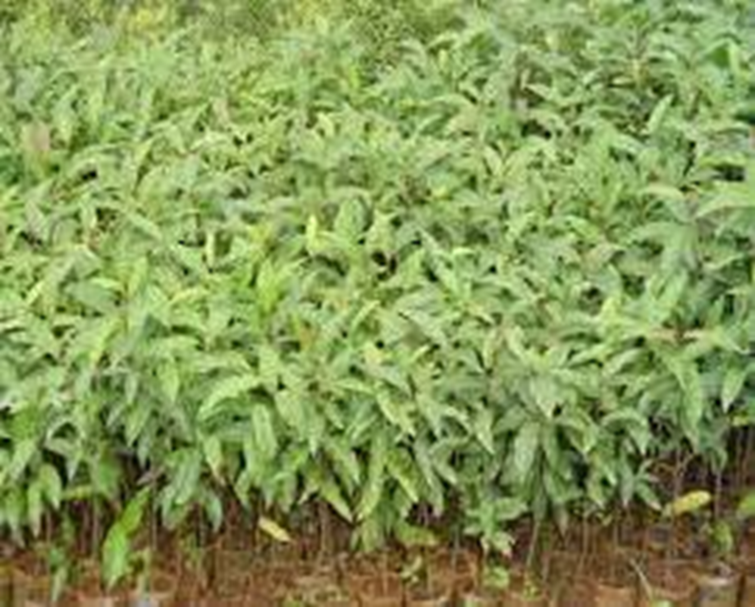
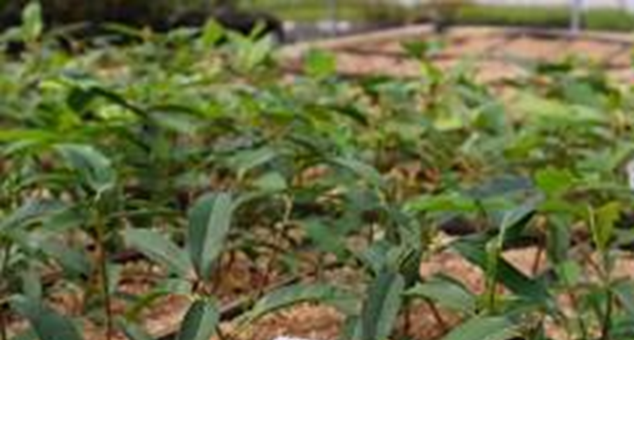
Community Germination Beds for Prunus africana
The illustration of community nurseries represents more than just a horticultural technique; it constitutes the strategic pillar of inclusive and sustainable conservation, particularly for Prunus africana and other indigenous species.
As a lever for ecological resilience, these structures make it possible to recreate the biological complexity of the natural forest by preserving local genetic diversity adapted to the PNKB microclimate and by reconstituting essential ecological niches for primates.
On an economic level, the nursery marks a crucial transition from wild exploitation to controlled production; by domesticating the species, pressure on the ancient trees of the primary forest is reduced while providing financial empowerment to rural households through the sale of seedlings.
Beyond the biological aspect, these nurseries foster social ownership and local governance by serving as educational spaces where the transfer of knowledge regarding complex germination techniques takes place. This process strengthens a sense of belonging, transforming every inhabitant into a true guardian of the forest.
Finally, faced with the threats of extinction looming over listed species like Prunus africana, the nursery acts as a conservation shield and a "bank" of last resort, compensating for losses caused by destructive debarking through the constant renewal of generations. In short, the community nursery is the interface where forestry science and local knowledge converge, asserting itself as the most concrete tool for reconciling human development with the survival of great apes and the ecological balance of the PNKB and other forests.